
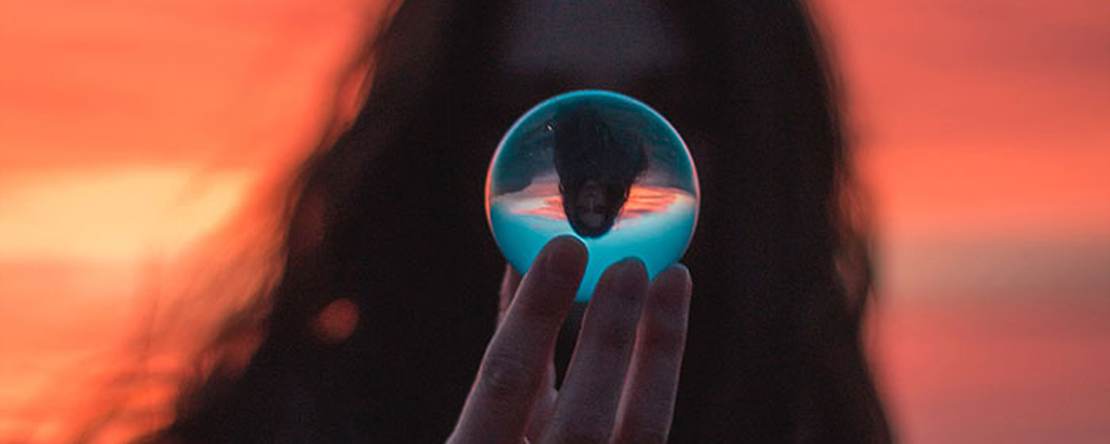
Palmistry (hasta samudrik) reads the shape of the hand, fingers, mounts and lines. Samudrik Shastra, the wider Indian tradition of body reading, also includes face reading. They are belief-based practices, practised in many cultures.
Who it is for
People curious about palm reading, or those who want a physical-trait reading as a complement to their chart.
What a reading looks at
- Hand shape and fingers: temperament and working style
- Major lines: life, head, heart and fate lines
- Mounts: the pads beneath the fingers, linked with qualities
- Face reading: forehead, eyes, nose and lips, as traditional indicators
How an online palm reading works
- Take clear photos of both palms in daylight, fingers slightly apart, and the sides of the hands.
- Share them securely.
- Join a video call. The reader may ask you to show your palms live. Online palmistry has limits. Pressure, skin texture and fine lines are difficult to see.
What to provide
Photos of both palms, which hand is dominant, your age.
What you receive
A reading of the main features, framed as tendencies.
Limitations
Lines change over time, and different readers interpret them differently. Palmistry cannot predict health conditions, death or specific events. Please do not use it for medical decisions.
Palmistry is one of the oldest forms of Indian divination, known in tradition as Hasta Samudrika Shastra. It looks at the shape of the hand, the pattern of its lines, the mounts beneath the fingers and the way the palm is held, and reads them as a symbolic portrait of character and tendencies. Many people in Mumbai and Thane are drawn to it out of simple curiosity, while others come at a turning point and want a thoughtful second perspective.
It is important to be clear about what palmistry is. It is a traditional interpretive art, not a science, and a reading is never a guarantee of events, outcomes or timelines. We do not offer medical, legal, financial or fertility predictions. If you have searched for a palm astrologer or typed palm reading near me, this article explains what the practice involves and how a consultation with Sansthaan works.
Why People Look for Palm Reading Near Me
Search terms such as palm read near me, palm reading near me and hand reader near me are among the most common ways people begin. The reason is usually simple: a palm reading is a personal, face-to-face experience, and people want to sit with someone they can speak to openly.
Palmistry sits comfortably alongside other Vedic practices that families have consulted for generations. Whether you live in Mumbai, India, or are visiting from elsewhere in Thane, the first step is the same: find a reader who is honest about the tradition and unhurried in conversation.
The Hands Themselves: Shape, Size and Fingers
Traditional palmistry begins before any line is read. The overall shape of the hand, the length of the palm compared with the fingers, the flexibility of the thumb and the texture of the skin are all considered. Hands are often grouped into broad types associated with the classical elements of earth, air, fire and water, each linked symbolically with a style of temperament.
Fingers and thumbs carry their own meaning. The thumb is associated with will and determination, the index finger with leadership, the middle finger with responsibility, the ring finger with creativity and the little finger with communication. The mounts, the soft raised areas at the base of each finger and on the heel of the palm, are linked in tradition with planets, so the reader may also draw connections to astrology. A responsible reader holds these generalisations lightly.
The Major Lines of the Palm
Four lines are usually treated as the major lines. The life line curves around the base of the thumb and is traditionally read as a symbol of vitality and the general rhythm of one's life. It is not a measure of how long a person will live, and we say this plainly, because it is a very common misunderstanding. The head line runs across the palm and is associated with thinking style, focus and curiosity.
The heart line lies above it and is read as a symbol of emotional temperament and the way a person relates to others. The fate line, which not everyone has, runs vertically toward the middle finger and is traditionally linked with career, duty and the sense of direction in life.
Minor lines, such as the sun line, the mercury line and the marriage lines, are also noted, along with markings like crosses, islands and stars. Readers differ in how they interpret these, which is another reason to treat any reading as a personal perspective and not a final word.
Which Hand Is Read?
A question that comes up often is which hand to show. In many traditions, the dominant hand is read as showing the life a person is actively building, while the other hand is associated with inherited tendencies and early conditioning.
At Sansthaan we usually look at both hands together and explain how the two compare.
Face Reading and the Wider Practice
Face reading is a related tradition, known in Indian and other Asian systems, in which features such as the forehead, eyebrows, eyes, nose and jaw are read as symbols of temperament. It is sometimes included alongside palmistry because both draw on the same idea that the body carries a symbolic record of character. Those who search for face reading near me are often curious about this complementary angle.
As with palmistry, we present it as tradition and not as science. We never suggest that anyone's features limit what they can do. Face reading in a consultation is a light, reflective addition for those who are interested, and it is entirely optional. If you would prefer to focus on the hands, that is perfectly fine.
Astrologer and Palmist: Combining Traditions
Many visitors specifically look for an astrologer and palmist in one place, and others search for astrologer palm reading as a combined service. The two traditions complement each other well. A birth chart describes the position of the planets at the time of birth, while palmistry reads the hand as it is today, and a conversation that holds both can feel richer than either alone.
In practice, we may compare what the horoscope suggests about temperament with what the hand shows, and discuss where they agree or differ. Where they differ, we do not force a conclusion. Both are interpretive, and the point is to offer perspective. If you already have a horoscope, bring it along.
What to Look for in the Best Palmist Near Me
People often ask us how to choose the best palmist near me. A trustworthy palmist explains what they are looking at and why, invites your questions and acknowledges the limits of the practice. They do not frighten you, sell cures or present a reading as a certainty.
When you look for a palmist near me, it also helps to ask about their approach in advance. Will they read both hands and explain their reasoning? Our own approach in Mumbai, India is modest and conversational: we read, we explain, and we leave the interpretation to you.
How a Palmistry Consultation Works at Sansthaan
A session begins with a short conversation about what brought you in. We then look at both hands, take notes on the main lines and mounts, and explain each observation in simple language. You are encouraged to interrupt and ask questions at any point, since the reading is a dialogue.
If you are interested, we can add a brief face reading or look at your horoscope alongside the palm, but neither is required. We avoid fear-based statements and never claim to know what will happen.
Frequently Asked Questions: Palmistry, Hand and Face Reading
A palm astrologer reads the hands according to traditional palmistry and may connect what they see with astrological ideas such as the planets associated with each mount. The reading is interpretive and is offered as perspective, not prediction.
Look for a reader who is transparent about method, reads your actual hands and invites questions. Visiting in person lets you judge whether you feel comfortable. Sansthaan offers palm reading in Mumbai, India, and across Thane.
No reader can promise to predict events. Palmistry is a traditional art that describes tendencies symbolically. Treat any reading as food for reflection and not as a guarantee.
The life line, head line, heart line and fate line are the four main ones. Each is read symbolically as vitality, thinking style, emotional temperament and sense of direction. None of them is a measure of lifespan.
Choose someone who explains their reasoning, acknowledges the limits of palmistry and avoids pressure or fear. Asking about session length and approach beforehand is a sensible step.
Honesty, patience and clear explanation matter more than bold claims. The best palmist near me is simply someone you trust to be straightforward about what the tradition can offer.
Yes, face reading can be included as an optional, reflective addition. It is presented as tradition and not as science, and it can be skipped if you prefer.
Yes. Many visitors in Mumbai, India prefer an astrologer and palmist in one consultation, so the horoscope and the hand can be discussed side by side. Astrologer palm reading is a combined conversation.
No. We do not offer medical, legal, financial or fertility predictions. For those matters, please consult a qualified professional.
If you would like a calm and honest conversation about your hands, your horoscope or both, Sansthaan would be glad to meet you. We welcome visitors from across Mumbai and Thane, and a palmistry consultation is a gentle place to begin whether you are curious or at a crossroads. Get in touch to arrange a time, bring your questions, and we will walk through what the tradition says in plain, respectful language.
Many readers look at both. Traditionally the dominant hand is read for the present and the other for inherited traits, and we explain which we use during the session.
Related Services

Numerology Reading
Understand your birth date numbers, Lo Shu grid and number cycles.
Explore Numerology Reading
Tarot Reading
How a tarot reading works, what it can and cannot offer, and how to prepare your question.
Explore Tarot ReadingName Numerology for Personal and Business Names
How name numerology works for personal and business names, what suggestions mean and what to check before changing a name.
Explore Name Numerology for Personal and Business NamesMore guides

Samudrik Shastra in Mumbai and Thane
Samudrik Shastra explained: face reading, forehead reading and body signs in the Indian tradition, with honest limits. Online sessions for.
Explore Samudrik Shastra in Mumbai and Thane
Handwriting and Signature Analysis in Mumbai and Thane
Handwriting and signature analysis explained honestly, plus thumb impression reading. Online sessions in English, Hindi or Marathi for.
Explore Handwriting and Signature Analysis in Mumbai and ThaneAstrology is a traditional, belief-based practice. It offers interpretation, not guarantees, and is not a substitute for medical, legal, financial or mental-health advice.
AboutFAQsContactBlogSite MapPrivacy PolicyTerms & ConditionsDisclaimerRefund PolicyCookie PolicyWhatsApp ConsentDo Not Sell My Data
© 2026 Sansthaan. All rights reserved.